

Our organization was founded in 1981 by a small group of women exposed to emerging state and national information on sexual and domestic violence. Concerned about the safety of individuals and families, this group started an independent organization, The Camden, Currituck and Pasquotank Task Force on Crimes Against Women, Inc., which soon grew to include Perquimans, Chowan and Gates Counties and was formally renamed as Albemarle Hopeline. Through a small grant from the North Carolina Council on the Status of Women, a 24-hour crisis line was started in late 1982, becoming the foundation for the cadre of intervention and prevention services that followed.
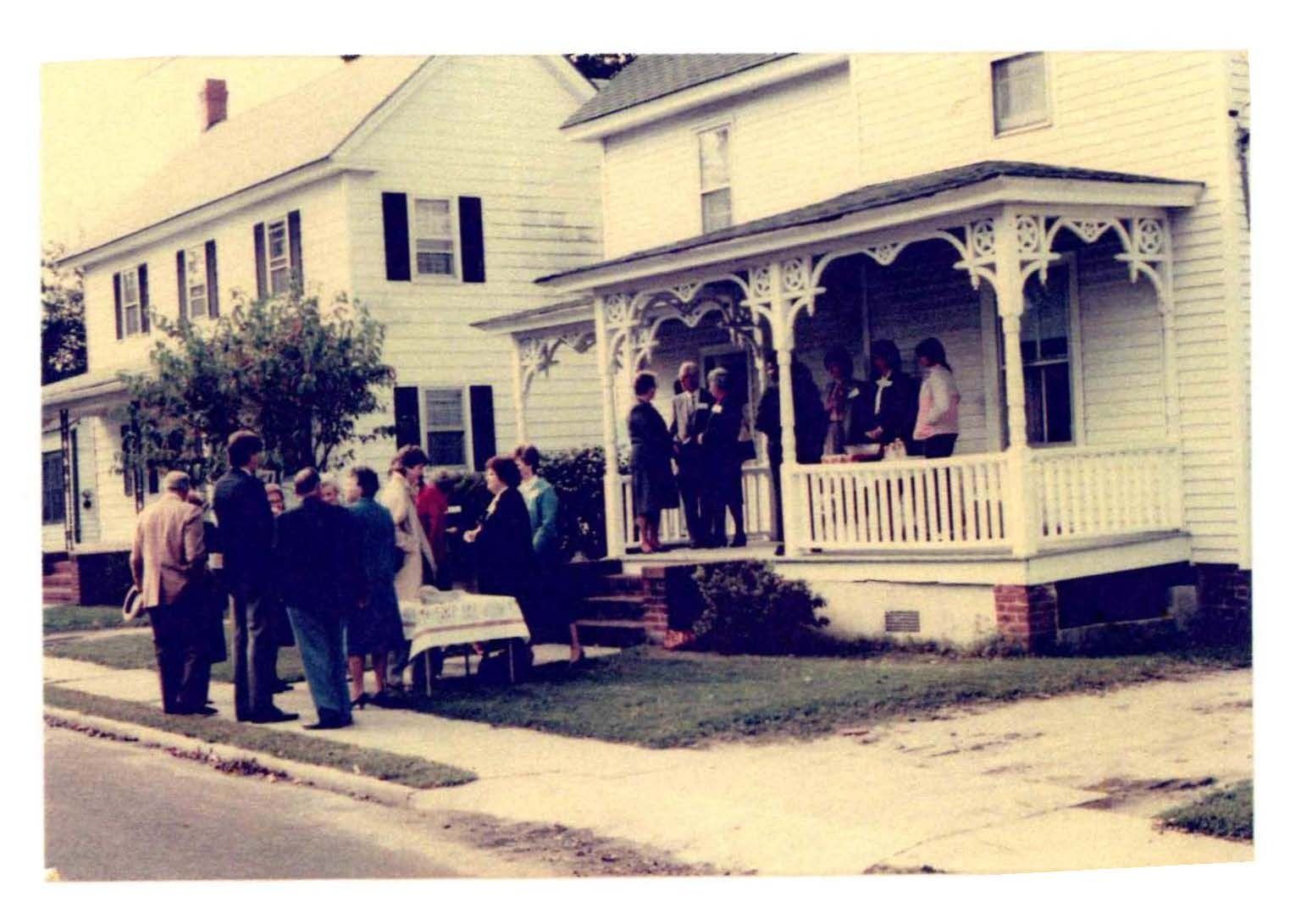
Initially, little was known of effective strategies to combat the identified concerns surrounding sexual and domestic violence. In 1983, a part-time director was hired to coordinate services within the six-county area. Prevention efforts consisted of a volunteer going into the public schools educating students about safe touches, date rape and sexual assault. Victims in the early years were offered short-term motel stays and later the use of a small apartment was donated until the first three-bedroom shelter, located on Greenleaf Street in Elizabeth CityElizabeth City was acquired in 1985. Community members helped add on to the home, building a playroom for the children and making other updates.
Hopeline’s sexual assault program was expanded in 1987 and a sexual assault educator and full-time therapist were hired.
Having quickly outgrown the first shelter location, a larger home on Main Street in Elizabeth City was purchased in 1989 which included office space for support services. Hopeline was not welcomed in their new home, however, as neighbors filed petitions to prevent the shelter from opening, and even placed threatening phone calls to Board members in the middle of the night. The zoning issue took a ruling from the state Attorney General's office, but due to the courage and determination of Hopeline's Board and Executive Director, Hope House received the green light to open its doors that summer.
A court advocacy component was added in 1995, along with a full-time domestic violence counselor. Court advocates to this day help victims who are seeking domestic violence protection orders, and accompany victims to all civil and criminal proceedings so that they are prepared for the court process, are provided with emotional support, and have someone in their corner so they are not intimidated out of receiving the justice and protection they deserve.
At the turn of the century, Hopeline began service expansion with emphasis on outreach to outlying counties, with the opening of three direct service satellite offices located in Currituck, Perquimans and Chowan Counties. (The Perquimans office has since closed, but Hopeline makes arrangements to meet with clients in all counties in safe spaces, and to provide transportation for those who need to access services.)
Hopeline’s Clothesline Thrift Store also opened to further support outreach efforts and provide funding for victim services. The thrift store is not only a fundraising arm of our organization, but is also a material resource for our clients, who can "shop" there free of charge. So whether a family arrives at shelter with just the clothes on their back, or needs to shop for home furnishings when moving into a new apartment, the store greatly offsets the costs of providing for our clients' material needs. The store has held many different locations over the years, and moved into our current space just a month before the COVID-19 pandemic required its temporary closure.
As the need for services increased, Hopeline recognized a larger facility was needed once again, and launched a capital campaign called "Hope Endures" to purchase a new building which would have adequate space for shelter, counseling, and administration all under one roof. Individual donors, businesses, foundations and philanthropists all contributed to the purchase of a 14,000 square foot, handicapped accessible facility, which opened in February 2026. The building is comprised of two wings: Hope House, capable of sheltering 30 victims and children; and office space for comprehensive direct services. The expanded direct service/shelter facility has provided enhanced opportunities to strengthen service delivery to victims and has maximized previously untapped agency potential. Victims are now afforded a greater continuity of in-house services that include individual counseling and court advocacy. This also produced an increase in children’s programming; support groups; on-site staff and community trainings; and collaboration with community partners.
The Pasquotank/Camden Sexual Assault Response Team (SART) was formed in 2012 and is made up of advocates, prosecutors, law enforcement, social workers, hospital personnel, and other community stakeholders to ensure a coordinated community response to sexual violence. SART has established protocols for advocacy at the emergency department during evidence collection, referral to follow-up care, and coordination amongst those involved in investigation and prosecution to increase accountability for offenders.
As our advocates saw how often defendants could afford attorneys and victims could not, they recognized that victims were being manipulated and intimidated out of getting the protection they deserved. Hopeline added a legal assistance program in 2015 to provide legal representation to victims seeking domestic violence protection orders (DVPOs). This has increased victims' likelihood of filing for and obtaining a DVPO.
In 2017, through grants provided by Victims of Crime Act (VOCA), Albemarle Hopeline hired its first Hispanic community specialist. This position provides outreach, advocacy and interpretive services to this underserved population.
While Hopeline's shelter program is essential to bringing victims to safety, it is only temporary, and we recognized that a few months in the shelter wasn’t long enough for most survivors to get back on their feet, especially in the affordable housing crisis we’re in. So Hopeline was fortunate to obtain funding from the Sentara Health Foundation to pilot our transitional housing program in 2022, and we were able to leverage the experience we gained in that pilot program to secure federal funding from the Department of Justice's Office on Violence Against Women to help with rental assistance for up to a year to help families restabilize after abuse and trauma.
Founding Hopeline members, some of whom are still involved in the agency today, traveled in uncharted waters as they explored ways to increase individual and community safety. In these rural communities, abuse issues were barely mentioned, especially rape and sexual assault. Each county was unique in personality, population and more. Yet, diverse service sections were penetrated and communities have gradually taken steps toward ownership of the problem of sexual and domestic abuse. Through interaction with Hopeline’s well-trained advocacy unit, the legal / law enforcement community has changed and now refers clients, consults with advocates, attends agency workshops, collaborates on professional trainings, supports Hopeline activities and serve on the Board of Directors. Social service agencies have invited agency participation on committees, requested trainings, collaborated on workshops, and serves as board members. The faith community has provided financial and physical support, hosted prevention programs, and also serves on the board.
For 45 years, Albemarle Hopeline has been a beacon of hope for our neighbors who are suffering from violence and abuse. We have also invested heavily in preventing future violence through youth education, professional training for first responders, and direct outreach to the community. Hopeline has been recognized for excellence in service to victims by the North Carolina Coalition Against Domestic Violence, the North Carolina Victims' Assistance Network, and the Governor's Crime Commission, among others. It has taken courage, determination, and support from the community to build and sustain this robust organization, which focuses not just on victim safety, but on long-term well-being to create a safer community for everyone.